| 查看上一个主题 :: 查看下一个主题 |
| 作者 |
内容 |
kds315* 


注册时间: 2008年3月12日
文章: 16912
来自: Kehl, Germany
Expire: 2021-03-09
|
 发表于: 周三 10月 12, 2011 7:19 pm 文章标题: Hypergon 26mm |
|
发表于: 周三 10月 12, 2011 7:19 pm 文章标题: Hypergon 26mm |
|
|
kds315* wrote:
I found and adapted a previously unknown ultra wide angle large format lens, obviously based on a Hypergon design, invented around 1900 by Emile van Hoegh for GOERZ and later adopted by Zeiss. This approx. 26mm one was made approx. 1950 I would guess.
It turned out that it seems to be a quite useful lens for my Panasonic GH1/2 camera. The focal length is an estimate, it is somewhere between 20 - 26mm from my simple measurements.
I tried to show the lens aberrations a bit here (scaled to fit a Lumix sensor, hence smaller used image angle (approx 84 degrees - that lens does 120 degrees) with object at infinity for an f11 aperture, which is the optimum aperture for that lens):

Here is a http://www.marcocavina.com/articoli_fotografici/Hypergon_Topogon_Biogon_Hologon/00_pag.htm technical article of my friend Marco Cavina that covers such ultra wide angles nicely with lots of images and diagrams as well as never finished prototypes (in Italian, use goggle translate if needed).
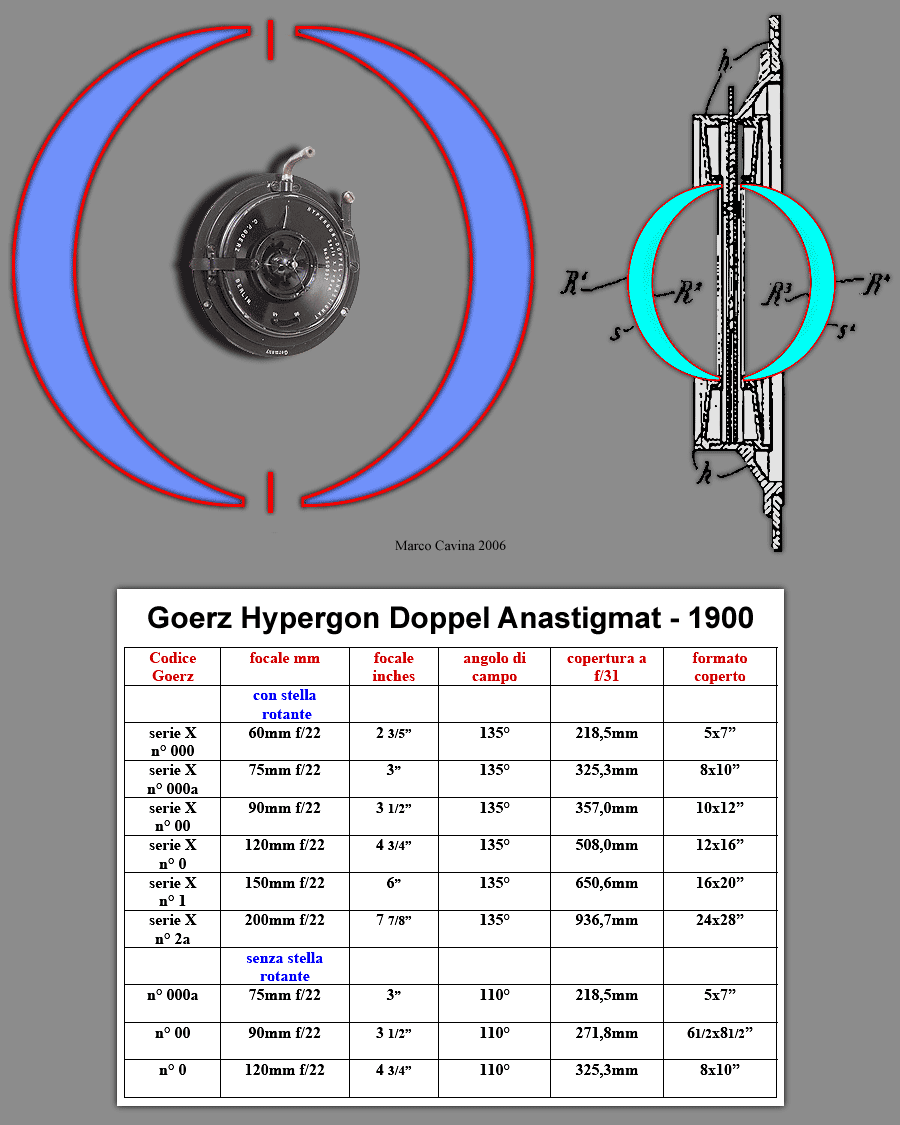
(c) Marco Cavina
VIS/UV:

These were also shot using it (crosseyed stereo):


and despite the well known aberrations it results in quite useful images.
Also outside handheld it does work nicely (crosseyed stereo):


(some images have already been shown here - just for completeness)
_________________
Klaus - Admin
"S'il vient a point, me souviendra" [Thomas Bohier (1460-1523)]
http://www.macrolenses.de for macro and special lens info
http://www.pbase.com/kds315/uv_photos for UV Images and lens/filter info
https://www.flickr.com/photos/kds315/albums my albums using various lenses
http://photographyoftheinvisibleworld.blogspot.com/ my UV BLOG
http://www.travelmeetsfood.com/blog Food + Travel BLOG
https://galeriafotografia.com Architecture + Drone photography
Currently most FAV lens(es):
X80QF f3.2/80mm
Hypergon f11/26mm
ELCAN UV f5.6/52mm
Zeiss UV-Planar f4/60mm
Zeiss UV-Planar f2/62mm
Lomo Уфар-12 f2.5/41mm
Lomo Зуфар-2 f4.0/350mm
Lomo ZIKAR-1A f1.2/100mm
Nikon UV Nikkor f4.5/105mm
Zeiss UV-Sonnar f4.3/105mm
CERCO UV-VIS-NIR f1.8/45mm
CERCO UV-VIS-NIR f4.1/94mm
CERCO UV-VIS-NIR f2.8/100mm
Steinheil Quarzobjektiv f1.8/50mm
Pentax Quartz Takumar f3.5/85mm
Carl Zeiss Jena UV-Objektiv f4/60mm
NYE OPTICAL Lyman-Alpha II f1.1/90mm
NYE OPTICAL Lyman-Alpha I f2.8/200mm
COASTAL OPTICS f4/60mm UV-VIS-IR Apo
COASTAL OPTICS f4.5/105mm UV-Micro-Apo
Pentax Ultra-Achromatic Takumar f4.5/85mm
Pentax Ultra-Achromatic Takumar f5.6/300mm
Rodenstock UV-Rodagon f5.6/60mm + 105mm + 150mm
最后由 kds315* 于 周三 10月 12, 2011 7:51 pm 编辑;共编辑 7 次 |
|
| 返回顶部 |
|
 |
convert1

注册时间: 2008年8月5日
文章: 100
来自: Germany
|
发表于: 周三 10月 12, 2011 7:26 pm 文章标题: |
|
发表于: 周三 10月 12, 2011 7:26 pm 文章标题: |
|
|
convert1 wrote:
Sehr schön Klaus !
_________________
http://www.flickr.com/photos/convert1/ |
|
| 返回顶部 |
|
|
kds315*
注册时间: 2008年3月12日
文章: 16912
来自: Kehl, Germany
Expire: 2021-03-09
|
发表于: 周三 10月 12, 2011 7:28 pm 文章标题: |
|
发表于: 周三 10月 12, 2011 7:28 pm 文章标题: |
|
|
kds315* wrote:
Dankeschön!
_________________
Klaus - Admin
"S'il vient a point, me souviendra" [Thomas Bohier (1460-1523)]
http://www.macrolenses.de for macro and special lens info
http://www.pbase.com/kds315/uv_photos for UV Images and lens/filter info
https://www.flickr.com/photos/kds315/albums my albums using various lenses
http://photographyoftheinvisibleworld.blogspot.com/ my UV BLOG
http://www.travelmeetsfood.com/blog Food + Travel BLOG
https://galeriafotografia.com Architecture + Drone photography
Currently most FAV lens(es):
X80QF f3.2/80mm
Hypergon f11/26mm
ELCAN UV f5.6/52mm
Zeiss UV-Planar f4/60mm
Zeiss UV-Planar f2/62mm
Lomo Уфар-12 f2.5/41mm
Lomo Зуфар-2 f4.0/350mm
Lomo ZIKAR-1A f1.2/100mm
Nikon UV Nikkor f4.5/105mm
Zeiss UV-Sonnar f4.3/105mm
CERCO UV-VIS-NIR f1.8/45mm
CERCO UV-VIS-NIR f4.1/94mm
CERCO UV-VIS-NIR f2.8/100mm
Steinheil Quarzobjektiv f1.8/50mm
Pentax Quartz Takumar f3.5/85mm
Carl Zeiss Jena UV-Objektiv f4/60mm
NYE OPTICAL Lyman-Alpha II f1.1/90mm
NYE OPTICAL Lyman-Alpha I f2.8/200mm
COASTAL OPTICS f4/60mm UV-VIS-IR Apo
COASTAL OPTICS f4.5/105mm UV-Micro-Apo
Pentax Ultra-Achromatic Takumar f4.5/85mm
Pentax Ultra-Achromatic Takumar f5.6/300mm
Rodenstock UV-Rodagon f5.6/60mm + 105mm + 150mm
|
|
| 返回顶部 |
|
|
patrickh

注册时间: 2007年8月23日
文章: 8551
来自: Oregon
Expire: 2011-11-18
|
发表于: 周三 10月 12, 2011 10:20 pm 文章标题: |
|
发表于: 周三 10月 12, 2011 10:20 pm 文章标题: |
|
|
patrickh wrote:
Lovely, fascinating and informative
patrickh
_________________
DSLR: Nikon D300 Nikon D200 Nex 5N
MF Zooms: Kiron 28-85/3.5, 28-105/3.2, 75-150/3.5, Nikkor 50-135/3.5 AIS // MF Primes: Nikkor 20/4 AI, 24/2 AI, 28/2 AI, 28/2.8 AIS, 28/3.5 AI, 35/1.4 AIS, 35/2 AIS, 35/2.8 PC, 45/2.8 P, 50/1.4 AIS, 50/1.8 AIS, 50/2 AI, 55/2.8 AIS micro, 55/3.5 AI micro, 85/2 AI, 100/2,8 E, 105/1,8 AIS, 105/2,5 AIS, 135/2 AIS, 135/2.8 AIS, 200/4 AI, 200/4 AIS micro, 300/4.5 AI, 300/4.5 AI ED, Arsat 50/1.4, Kiron 28/2, Vivitar 28/2.5, Panagor 135/2.8, Tamron 28/2.5, Tamron 90/2.5 macro, Vivitar 90/2.5 macro (Tokina) Voigtlander 90/3.5 Vivitar 105/2.5 macro (Kiron) Kaleinar 100/2.8 AI Tamron 135/2.5, Vivitar 135/2.8CF, 200/3.5, Tokina 400/5,6
M42: Vivitar 28/2.5, Tamron 28/2.5, Formula5 28/2.8, Mamiya 28/2.8, Pentacon 29/2.8, Flektogon 35/2.4, Flektogon 35/2.8, Takumar 35/3.5, Curtagon 35/4, Takumar 50/1.4, Volna-6 50/2.8 macro, Mamiya 50/1.4, CZJ Pancolar 50/1,8, Oreston 50/1.8, Takumar 50/2, Industar 50/3.5, Sears 55/1.4, Helios 58/2, Jupiter 85/2, Helios 85/1.5, Takumar 105/2.8, Steinheil macro 105/4.5, Tamron 135/2.5, Jupiter 135/4, CZ 135/4, Steinheil Culminar 135/4,5, Jupiter 135/3.5, Takumar 135/3.5, Tair 135/2.8, Pentacon 135/2.8, CZ 135/2.8, Taika 135/3.5, Takumar 150/4, Jupiter 200/4, Takumar 200/4
Exakta: Topcon 100/2.8(M42), 35/2.8, 58/1.8, 135/2.8, 135/2.8 (M42), Kyoei Acall 135/3.5
C/Y: Yashica 28/2.8, 50/1.7, 135/2.8, Zeiss Planar 50/1.4, Distagon 25/2.8
Hexanon: 28/3.5, 35/2.8, 40/1.8, 50/1.7, 52/1.8, 135/3.2, 135/3.5, 35-70/3.5, 200/3.5
P6 : Mir 38 65/3.5, Biometar 80/2.8, Kaleinar 150/2.8, Sonnar 180/2.8
Minolta SR: 28/2.8, 28/3.5, 35/2.8, 45/2, 50/2, 58/1.4, 50/1.7, 135/2.8, 200/3.5
RF: Industar 53/2.8, Jupiter 8 50/2
Enlarg: Rodagon 50/5,6, 80/5,6, 105/5.6, Vario 44-52/4, 150/5.6 180/5.6 El Nikkor 50/2,8,63/2.8,75/4, 80/5,6, 105/5.6, 135/5.6 Schneider 60/5.6, 80/5.6, 80/4S,100/5.6S,105/5.6,135/5.6, 135/5.6S, 150/5.6S, Leica 95/4 |
|
| 返回顶部 |
|
|
thePiRaTE!!


注册时间: 2008年10月31日
文章: 416
来自: Canada
|
发表于: 周三 10月 12, 2011 10:26 pm 文章标题: |
|
发表于: 周三 10月 12, 2011 10:26 pm 文章标题: |
|
|
thePiRaTE!! wrote:
I found the Hibiscus and the Crocus to be quite amazing in thier 3D-ness and clarity, thanks for sharing.
K.
_________________
kellysereda.com
Sony A7ii, A900, NEX-5
_______________________
Helios: 1.5/85 40-2.
Meyer-Optik: Trioplan 2.8/100, Oreston 1.8/50.
Minolta: Rokkor-PG 1.2/58.
Porst: 1.2/55 Color Reflex.
Sony: 4-5.6/70-400 G.
Takumar: Super Takumar 3.5/135, Super Takumar 1.4/50, SMC Takumar 3.5/28.
Topcon: Topcor 1.4/58.
Voigtländer: Nokton Classic SC 1.4/35.
Zeiss: Planar T*1.2/85 "60 jahre" C/Y, Vario-Sonnar T*3.4/35-70 C/Y, Vario-Sonnar T*2.8/16-35 ZA, Distagon T*2/24 ZA.
lenses for sale here |
|
| 返回顶部 |
|
|
Attila
注册时间: 2007年2月24日
文章: 58005
Expire: 2025-11-18
|
发表于: 周三 10月 12, 2011 11:28 pm 文章标题: |
|
发表于: 周三 10月 12, 2011 11:28 pm 文章标题: |
|
|
Attila wrote:
| thePiRaTE!! 写道: |
I found the Hibiscus and the Crocus to be quite amazing in thier 3D-ness and clarity, thanks for sharing.
K. |
+1 |
|
| 返回顶部 |
|
|
Farside

注册时间: 2007年9月1日
文章: 6579
来自: Ireland
Expire: 2013-12-27
|
发表于: 周四 10月 13, 2011 12:27 am 文章标题: |
|
发表于: 周四 10月 13, 2011 12:27 am 文章标题: |
|
|
Farside wrote:
The stereo effect nearly knocked my eyes out! Exellent.
_________________
Dave - Moderator
Camera Fiend and Biograph Operator
If I wanted soot and whitewash I'd be a chimney sweep and house painter.
The Lenses of Farside (click)
BUY FRESH FOMAPAN TO HELP KEEP THE FACTORY ALIVE ---
Foma Campaign topic -
http://forum.mflenses.com/foma-campaign-t55443.html
FOMAPAN on forum -
http://www.mflenses.com/fs.php?sw=Fomapan
Webshop Norway
http://www.fomafoto.com/
Webshop Czech
https://fomaobchod.cz/inshop/scripts/shop.aspx?action=DoChangeLanguage&LangID=4 |
|
| 返回顶部 |
|
|
Kathmandu

注册时间: 2009年12月9日
文章: 1479
来自: (Kathmandu,Nepal. Currently)Pacific Northwest, USA
Expire: 2012-04-08
|
发表于: 周四 10月 13, 2011 3:48 am 文章标题: |
|
发表于: 周四 10月 13, 2011 3:48 am 文章标题: |
|
|
Kathmandu wrote:
Thanks for sharing Klaus.
_________________
kathmandu
Sony α 700 DSLR
 |
|
| 返回顶部 |
|
|
my_photography
注册时间: 2008年11月3日
文章: 2772
来自: Pearl of the Orient
Expire: 2016-12-25
|
发表于: 周四 10月 13, 2011 4:00 am 文章标题: |
|
发表于: 周四 10月 13, 2011 4:00 am 文章标题: |
|
|
my_photography wrote:
| Attila 写道: |
| thePiRaTE!! 写道: |
I found the Hibiscus and the Crocus to be quite amazing in thier 3D-ness and clarity, thanks for sharing.
K. |
+1 |
+2.
Nice to see 2nd live of a lens from yesteryears.
_________________
Zeiss: CJZ Flektogon 20/2.8, CJZ Flektogon 20/4, , CJZ Pentacon 29/2.8, CJZ Flektogon 35/2.4, CJZ Pancolar 50/1.8, Tessar 50/2.8, Biotar 7.5cm/1.5, CJZ Pancolar 80/1.8, CJZ Sonnar 135/3.5, CJZ Pentacon 135/2.8 CJZ Sonnar 200/2.8
Other Germany: Meyer Primoplan 50/1.8, Meyer Trioplan 100/2.8
Takumar: SMC 50/1.4 Super Tak 55/2, Super Tak 85/1.9, S-M-C 135/3.5, Super Tak 150/4
Russian: Zenith 16/2.8, Mir-24M 2/35, Volna-9 50/2.8, Helios 44M (58/2), Helios 44M-3 MC (58/2), Helios 40 (85/1.5), Tair 11A (135/2.8 )
Others: Sears 28/2.8, Sankor 35/2.8, Enna M�nchen Tele-Ennalyt 135/3.5
Zoom Sigma Zoom 28-85/3.5-4.5
|
|
| 返回顶部 |
|
|
Kram

注册时间: 2010年2月6日
文章: 1344
来自: Portland, OR
|
发表于: 周四 10月 13, 2011 5:33 am 文章标题: |
|
发表于: 周四 10月 13, 2011 5:33 am 文章标题: |
|
|
Kram wrote:
In purely unscientific terns- wow Klaus! Amazing. Hibiscus is so sharp! Lovely. |
|
| 返回顶部 |
|
|
LucisPictor

注册时间: 2007年2月26日
文章: 17633
来自: Oberhessen, Germany / Maidstone ('95-'96)
Expire: 2013-12-03
|
发表于: 周四 10月 13, 2011 6:42 am 文章标题: |
|
发表于: 周四 10月 13, 2011 6:42 am 文章标题: |
|
|
LucisPictor wrote:
Amazing, Klaus! Where do you always find those gems? 
Thanks a lot for sharing. Your experiences increase the value of this forum considerably!!
_________________
Personal forum activity on pause every now and again (due to job obligations)!
Carsten, former Moderator 
Things ON SALE
Carsten = "KAPCTEH" = "Karusutenu" | T-shirt?.........................My photos from Emilia: http://www.schouler.net/emilia/emilia2011.html
My gear: http://retrocameracs.wordpress.com/ausrustung/
Old list: http://forum.mflenses.com/viewtopic.php?t=65 (Not up-to-date, sorry!) | http://www.lucispictor.de | http://www.alensaweek.wordpress.com |
http://www.retrocamera.de |
|
| 返回顶部 |
|
|
Spotmatic

注册时间: 2008年8月18日
文章: 4045
来自: Netherlands
|
发表于: 周四 10月 13, 2011 7:27 am 文章标题: |
|
发表于: 周四 10月 13, 2011 7:27 am 文章标题: |
|
|
Spotmatic wrote:
I like them very much. Even the strain on my eyes seems to have gone away 
Can we also see a picture of the lens, please? I always found the Hypergon very intriguing with its air-driven rotating star fan.
_________________
Peter - Moderator
Pentax K-5 + Pentax 645 + Canon 5D + Bessa RF 10,5cm Heliar, and a 'little' bag full of MF lenses. The lens list is * here *.
My fast 80s: Asahi-Kogaku Takumar 83mm f/1.9 - Super-Takumar 85mm f/1.9 - FA 77mm f/1.8 Limited - Cyclop 85/1.5 (Helios-40 innards) - Komura 80mm f/1.8 - Meyer Görlitz Primoplan 7,5cm 1:1.9 - Carl Zeiss Jena 80mm f/1.8 Pancolar - Canon 85mm f/1.8 S.S.C. - Canon 85mm f/1.2 S.S.C. Aspherical |
|
| 返回顶部 |
|
|
kds315*
注册时间: 2008年3月12日
文章: 16912
来自: Kehl, Germany
Expire: 2021-03-09
|
发表于: 周四 10月 13, 2011 8:01 am 文章标题: |
|
发表于: 周四 10月 13, 2011 8:01 am 文章标题: |
|
|
kds315* wrote:
Thanks a lot guys!
Well, finding such a lens was based on a search for a capable wide angle lens for my UV work, so I needed a simple lens design (See Graham's thread about lens designs - it makes sense to know a bit about it) that would allow enough UV light to be passed. The Hypergon had both: a simple two-menisci design and a very wide useful angle with the only downside of having to stop down considerably. After some month of search, I was able to locate the one I have now. Having your homework done as well as patience and persistence are the key to success here ::biggrin::
_________________
Klaus - Admin
"S'il vient a point, me souviendra" [Thomas Bohier (1460-1523)]
http://www.macrolenses.de for macro and special lens info
http://www.pbase.com/kds315/uv_photos for UV Images and lens/filter info
https://www.flickr.com/photos/kds315/albums my albums using various lenses
http://photographyoftheinvisibleworld.blogspot.com/ my UV BLOG
http://www.travelmeetsfood.com/blog Food + Travel BLOG
https://galeriafotografia.com Architecture + Drone photography
Currently most FAV lens(es):
X80QF f3.2/80mm
Hypergon f11/26mm
ELCAN UV f5.6/52mm
Zeiss UV-Planar f4/60mm
Zeiss UV-Planar f2/62mm
Lomo Уфар-12 f2.5/41mm
Lomo Зуфар-2 f4.0/350mm
Lomo ZIKAR-1A f1.2/100mm
Nikon UV Nikkor f4.5/105mm
Zeiss UV-Sonnar f4.3/105mm
CERCO UV-VIS-NIR f1.8/45mm
CERCO UV-VIS-NIR f4.1/94mm
CERCO UV-VIS-NIR f2.8/100mm
Steinheil Quarzobjektiv f1.8/50mm
Pentax Quartz Takumar f3.5/85mm
Carl Zeiss Jena UV-Objektiv f4/60mm
NYE OPTICAL Lyman-Alpha II f1.1/90mm
NYE OPTICAL Lyman-Alpha I f2.8/200mm
COASTAL OPTICS f4/60mm UV-VIS-IR Apo
COASTAL OPTICS f4.5/105mm UV-Micro-Apo
Pentax Ultra-Achromatic Takumar f4.5/85mm
Pentax Ultra-Achromatic Takumar f5.6/300mm
Rodenstock UV-Rodagon f5.6/60mm + 105mm + 150mm
最后由 kds315* 于 周四 10月 13, 2011 8:22 am 编辑;共编辑 2 次 |
|
| 返回顶部 |
|
|
Orio
注册时间: 2007年2月24日
文章: 29545
来自: West Emilia
Expire: 2012-12-04
|
发表于: 周四 10月 13, 2011 8:09 am 文章标题: |
|
发表于: 周四 10月 13, 2011 8:09 am 文章标题: |
|
|
Orio wrote:
I agree with Carsten, your contributions are unvaluable!
The symmetric wide angles, aren't they fascinating? I now also have one, thanks to Carsten (the Orion) 
_________________
Orio, Administrator
T*
NE CEDE MALIS AUDENTIOR ITO
Ferrania film is reborn! http://www.filmferrania.it/
Support the Ornano film chemicals company and help them survive!
http://forum.mflenses.com/ornano-chemical-products-t55525.html |
|
| 返回顶部 |
|
|
kds315*
注册时间: 2008年3月12日
文章: 16912
来自: Kehl, Germany
Expire: 2021-03-09
|
发表于: 周四 10月 13, 2011 8:20 am 文章标题: |
|
发表于: 周四 10月 13, 2011 8:20 am 文章标题: |
|
|
kds315* wrote:
Thanks Orio. Yes, they are and I had the 28mm Orion too a while ago (now with my friend Marco, who also has my 35mm Jupiter and 20mm Russar), a very fine lens indeed!
_________________
Klaus - Admin
"S'il vient a point, me souviendra" [Thomas Bohier (1460-1523)]
http://www.macrolenses.de for macro and special lens info
http://www.pbase.com/kds315/uv_photos for UV Images and lens/filter info
https://www.flickr.com/photos/kds315/albums my albums using various lenses
http://photographyoftheinvisibleworld.blogspot.com/ my UV BLOG
http://www.travelmeetsfood.com/blog Food + Travel BLOG
https://galeriafotografia.com Architecture + Drone photography
Currently most FAV lens(es):
X80QF f3.2/80mm
Hypergon f11/26mm
ELCAN UV f5.6/52mm
Zeiss UV-Planar f4/60mm
Zeiss UV-Planar f2/62mm
Lomo Уфар-12 f2.5/41mm
Lomo Зуфар-2 f4.0/350mm
Lomo ZIKAR-1A f1.2/100mm
Nikon UV Nikkor f4.5/105mm
Zeiss UV-Sonnar f4.3/105mm
CERCO UV-VIS-NIR f1.8/45mm
CERCO UV-VIS-NIR f4.1/94mm
CERCO UV-VIS-NIR f2.8/100mm
Steinheil Quarzobjektiv f1.8/50mm
Pentax Quartz Takumar f3.5/85mm
Carl Zeiss Jena UV-Objektiv f4/60mm
NYE OPTICAL Lyman-Alpha II f1.1/90mm
NYE OPTICAL Lyman-Alpha I f2.8/200mm
COASTAL OPTICS f4/60mm UV-VIS-IR Apo
COASTAL OPTICS f4.5/105mm UV-Micro-Apo
Pentax Ultra-Achromatic Takumar f4.5/85mm
Pentax Ultra-Achromatic Takumar f5.6/300mm
Rodenstock UV-Rodagon f5.6/60mm + 105mm + 150mm
|
|
| 返回顶部 |
|
|
kds315*
注册时间: 2008年3月12日
文章: 16912
来自: Kehl, Germany
Expire: 2021-03-09
|
发表于: 周四 10月 13, 2011 7:27 pm 文章标题: |
|
发表于: 周四 10月 13, 2011 7:27 pm 文章标题: |
|
|
kds315* wrote:
| Spotmatic 写道: |
I like them very much. Even the strain on my eyes seems to have gone away
Can we also see a picture of the lens, please? I always found the Hypergon very intriguing with its air-driven rotating star fan. |
Mine doesn't have a star shaped fan and it is not needed anyway as I only use about 84 degrees of about 120, so the light fall off is much less (unnoticed by me).

_________________
Klaus - Admin
"S'il vient a point, me souviendra" [Thomas Bohier (1460-1523)]
http://www.macrolenses.de for macro and special lens info
http://www.pbase.com/kds315/uv_photos for UV Images and lens/filter info
https://www.flickr.com/photos/kds315/albums my albums using various lenses
http://photographyoftheinvisibleworld.blogspot.com/ my UV BLOG
http://www.travelmeetsfood.com/blog Food + Travel BLOG
https://galeriafotografia.com Architecture + Drone photography
Currently most FAV lens(es):
X80QF f3.2/80mm
Hypergon f11/26mm
ELCAN UV f5.6/52mm
Zeiss UV-Planar f4/60mm
Zeiss UV-Planar f2/62mm
Lomo Уфар-12 f2.5/41mm
Lomo Зуфар-2 f4.0/350mm
Lomo ZIKAR-1A f1.2/100mm
Nikon UV Nikkor f4.5/105mm
Zeiss UV-Sonnar f4.3/105mm
CERCO UV-VIS-NIR f1.8/45mm
CERCO UV-VIS-NIR f4.1/94mm
CERCO UV-VIS-NIR f2.8/100mm
Steinheil Quarzobjektiv f1.8/50mm
Pentax Quartz Takumar f3.5/85mm
Carl Zeiss Jena UV-Objektiv f4/60mm
NYE OPTICAL Lyman-Alpha II f1.1/90mm
NYE OPTICAL Lyman-Alpha I f2.8/200mm
COASTAL OPTICS f4/60mm UV-VIS-IR Apo
COASTAL OPTICS f4.5/105mm UV-Micro-Apo
Pentax Ultra-Achromatic Takumar f4.5/85mm
Pentax Ultra-Achromatic Takumar f5.6/300mm
Rodenstock UV-Rodagon f5.6/60mm + 105mm + 150mm
|
|
| 返回顶部 |
|
|
kds315*
注册时间: 2008年3月12日
文章: 16912
来自: Kehl, Germany
Expire: 2021-03-09
|
发表于: 周五 10月 14, 2011 7:40 pm 文章标题: |
|
发表于: 周五 10月 14, 2011 7:40 pm 文章标题: |
|
|
kds315* wrote:
The special flare (and flare resistance) it has...


_________________
Klaus - Admin
"S'il vient a point, me souviendra" [Thomas Bohier (1460-1523)]
http://www.macrolenses.de for macro and special lens info
http://www.pbase.com/kds315/uv_photos for UV Images and lens/filter info
https://www.flickr.com/photos/kds315/albums my albums using various lenses
http://photographyoftheinvisibleworld.blogspot.com/ my UV BLOG
http://www.travelmeetsfood.com/blog Food + Travel BLOG
https://galeriafotografia.com Architecture + Drone photography
Currently most FAV lens(es):
X80QF f3.2/80mm
Hypergon f11/26mm
ELCAN UV f5.6/52mm
Zeiss UV-Planar f4/60mm
Zeiss UV-Planar f2/62mm
Lomo Уфар-12 f2.5/41mm
Lomo Зуфар-2 f4.0/350mm
Lomo ZIKAR-1A f1.2/100mm
Nikon UV Nikkor f4.5/105mm
Zeiss UV-Sonnar f4.3/105mm
CERCO UV-VIS-NIR f1.8/45mm
CERCO UV-VIS-NIR f4.1/94mm
CERCO UV-VIS-NIR f2.8/100mm
Steinheil Quarzobjektiv f1.8/50mm
Pentax Quartz Takumar f3.5/85mm
Carl Zeiss Jena UV-Objektiv f4/60mm
NYE OPTICAL Lyman-Alpha II f1.1/90mm
NYE OPTICAL Lyman-Alpha I f2.8/200mm
COASTAL OPTICS f4/60mm UV-VIS-IR Apo
COASTAL OPTICS f4.5/105mm UV-Micro-Apo
Pentax Ultra-Achromatic Takumar f4.5/85mm
Pentax Ultra-Achromatic Takumar f5.6/300mm
Rodenstock UV-Rodagon f5.6/60mm + 105mm + 150mm
|
|
| 返回顶部 |
|
|
Jeff Zen
注册时间: 2009年6月17日
文章: 262
来自: Northwest USA
|
发表于: 周六 10月 15, 2011 9:01 pm 文章标题: |
|
发表于: 周六 10月 15, 2011 9:01 pm 文章标题: |
|
|
Jeff Zen wrote:
ausgezeichnet! |
|
| 返回顶部 |
|
|
kds315*
注册时间: 2008年3月12日
文章: 16912
来自: Kehl, Germany
Expire: 2021-03-09
|
发表于: 周六 10月 15, 2011 9:02 pm 文章标题: |
|
发表于: 周六 10月 15, 2011 9:02 pm 文章标题: |
|
|
kds315* wrote:
Danke Jeff!
_________________
Klaus - Admin
"S'il vient a point, me souviendra" [Thomas Bohier (1460-1523)]
http://www.macrolenses.de for macro and special lens info
http://www.pbase.com/kds315/uv_photos for UV Images and lens/filter info
https://www.flickr.com/photos/kds315/albums my albums using various lenses
http://photographyoftheinvisibleworld.blogspot.com/ my UV BLOG
http://www.travelmeetsfood.com/blog Food + Travel BLOG
https://galeriafotografia.com Architecture + Drone photography
Currently most FAV lens(es):
X80QF f3.2/80mm
Hypergon f11/26mm
ELCAN UV f5.6/52mm
Zeiss UV-Planar f4/60mm
Zeiss UV-Planar f2/62mm
Lomo Уфар-12 f2.5/41mm
Lomo Зуфар-2 f4.0/350mm
Lomo ZIKAR-1A f1.2/100mm
Nikon UV Nikkor f4.5/105mm
Zeiss UV-Sonnar f4.3/105mm
CERCO UV-VIS-NIR f1.8/45mm
CERCO UV-VIS-NIR f4.1/94mm
CERCO UV-VIS-NIR f2.8/100mm
Steinheil Quarzobjektiv f1.8/50mm
Pentax Quartz Takumar f3.5/85mm
Carl Zeiss Jena UV-Objektiv f4/60mm
NYE OPTICAL Lyman-Alpha II f1.1/90mm
NYE OPTICAL Lyman-Alpha I f2.8/200mm
COASTAL OPTICS f4/60mm UV-VIS-IR Apo
COASTAL OPTICS f4.5/105mm UV-Micro-Apo
Pentax Ultra-Achromatic Takumar f4.5/85mm
Pentax Ultra-Achromatic Takumar f5.6/300mm
Rodenstock UV-Rodagon f5.6/60mm + 105mm + 150mm
|
|
| 返回顶部 |
|
|
Nicolas_D
注册时间: 2016年6月21日
文章: 1
来自: St. Petersburg
|
发表于: 周二 6月 21, 2016 5:41 pm 文章标题: |
|
发表于: 周二 6月 21, 2016 5:41 pm 文章标题: |
|
|
Nicolas_D wrote:
| kds315* 写道: |
I found and adapted a previously unknown ultra wide angle large format lens, obviously based on a Hypergon design, invented around 1900 by Emile van Hoegh for GOERZ and later adopted by Zeiss. This approx. 26mm one was made approx. 1950 I would guess.
It turned out that it seems to be a quite useful lens for my Panasonic GH1/2 camera. The focal length is an estimate, it is somewhere between 20 - 26mm from my simple measurements.
I tried to show the lens aberrations a bit here (scaled to fit a Lumix sensor, hence smaller used image angle (approx 84 degrees - that lens does 120 degrees) with object at infinity for an f11 aperture, which is the optimum aperture for that lens)
|
| kds315* 写道: |
| Spotmatic 写道: |
I like them very much. Even the strain on my eyes seems to have gone away
Can we also see a picture of the lens, please? I always found the Hypergon very intriguing with its air-driven rotating star fan. |
Mine doesn't have a star shaped fan and it is not needed anyway as I only use about 84 degrees of about 120, so the light fall off is much less (unnoticed by me).
 |
At this photo only a front element could be seen but not the whole lens. So the following is my guess.
I haven’t ever heard about ‘unknown’ Hypergon 26 mm F/11, but DO know perfectly well a special Russian lens called Russar-25IM. It was produced in two modifications, i.e. 20mm F/10 122 degrees and 28mm F/11 90 degrees on 5x5cm frame. I own both of them. They were used for projection of stereophotogrammetrical slides. Consequently, they were produced in complementary pairs. One lens of each pair was marked as ‘Russar-25IM’ with full information about F, aperture and angle, while the second one was marked only by F and aperture. It is worthy to know that in order to get an appropriate IQ these marks MUST be directed to the FILM, but NOT to the object!
I guess that 'unknown Hypergon 26mm F/11' is, probably, Russar-25IM F=28mm 1:11
The following images show Russar-25IM 20mm F/10. The appearance of 28mm F/11 is just the same except the values of F and aperture:
最后由 Nicolas_D 于 周二 6月 21, 2016 5:46 pm 编辑;共编辑 1 次 |
|
| 返回顶部 |
|
|
calvin83

注册时间: 2009年4月12日
文章: 7740
来自: Hong Kong
|
发表于: 周二 6月 21, 2016 5:43 pm 文章标题: |
|
发表于: 周二 6月 21, 2016 5:43 pm 文章标题: |
|
|
calvin83 wrote:
| Nicolas_D 写道: |
At this photo only a front element could be seen but not the whole lens. So the following is my guess.
I haven’t ever heard about ‘unknown’ Hypergon 26 mm F/11, but DO know perfectly well a special Russian lens called Russar-25IM. It was produced in two modifications, i.e. 20mm F/10 122 degrees and 28mm F/11 90 degrees on 5x5cm frame. I own both of them. They were used for projection of stereophotogrammetrical slides. Consequently, they were produced in complementary pairs. One lens of each pair was marked as ‘Russar-25IM’ with full information about F, aperture and angle, while the second one was marked only by F and aperture. It is worthy to know that in order to get an appropriate IQ these marks MUST be directed to the FILM, but NOT to the object!
I guess that 'unknown Hypergon 26mm F/11' is, probably, Russar-25IM F=28mm 1:11
The following images show Russar-25IM 20mm F/10. The appearance of 28mm F/11 is just the same except the values of F and aperture:
http://www.photohistory.ru/1423836150186256.html
|
_________________
The best lens is the one you have with you.
https://lensfever.com/
https://www.instagram.com/_lens_fever/ |
|
| 返回顶部 |
|
|
kds315*
注册时间: 2008年3月12日
文章: 16912
来自: Kehl, Germany
Expire: 2021-03-09
|
发表于: 周二 6月 21, 2016 6:13 pm 文章标题: |
|
发表于: 周二 6月 21, 2016 6:13 pm 文章标题: |
|
|
kds315* wrote:
| Nicolas_D 写道: |
| kds315* 写道: |
I found and adapted a previously unknown ultra wide angle large format lens, obviously based on a Hypergon design, invented around 1900 by Emile van Hoegh for GOERZ and later adopted by Zeiss. This approx. 26mm one was made approx. 1950 I would guess.
It turned out that it seems to be a quite useful lens for my Panasonic GH1/2 camera. The focal length is an estimate, it is somewhere between 20 - 26mm from my simple measurements.
I tried to show the lens aberrations a bit here (scaled to fit a Lumix sensor, hence smaller used image angle (approx 84 degrees - that lens does 120 degrees) with object at infinity for an f11 aperture, which is the optimum aperture for that lens)
|
| kds315* 写道: |
| Spotmatic 写道: |
I like them very much. Even the strain on my eyes seems to have gone away
Can we also see a picture of the lens, please? I always found the Hypergon very intriguing with its air-driven rotating star fan. |
Mine doesn't have a star shaped fan and it is not needed anyway as I only use about 84 degrees of about 120, so the light fall off is much less (unnoticed by me).
|
At this photo only a front element could be seen but not the whole lens. So the following is my guess.
I haven’t ever heard about ‘unknown’ Hypergon 26 mm F/11, but DO know perfectly well a special Russian lens called Russar-25IM. It was produced in two modifications, i.e. 20mm F/10 122 degrees and 28mm F/11 90 degrees on 5x5cm frame. I own both of them. They were used for projection of stereophotogrammetrical slides. Consequently, they were produced in complementary pairs. One lens of each pair was marked as ‘Russar-25IM’ with full information about F, aperture and angle, while the second one was marked only by F and aperture. It is worthy to know that in order to get an appropriate IQ these marks MUST be directed to the FILM, but NOT to the object!
I guess that 'unknown Hypergon 26mm F/11' is, probably, Russar-25IM F=28mm 1:11
The following images show Russar-25IM 20mm F/10. The appearance of 28mm F/11 is just the same except the values of F and aperture: http://www.photohistory.ru/1423836150186256.html |
Nicolas, I know lenses rather well, and trust me that I'm able to differentiate a HYPERGON lens from the work of Rossinov, the Russar lens. It is not a Russar at all, but the rather simpler lens as I have shown above. Maybe tho, it had the same use and purpose you had mentioned, as I also have a pair of those lenses
_________________
Klaus - Admin
"S'il vient a point, me souviendra" [Thomas Bohier (1460-1523)]
http://www.macrolenses.de for macro and special lens info
http://www.pbase.com/kds315/uv_photos for UV Images and lens/filter info
https://www.flickr.com/photos/kds315/albums my albums using various lenses
http://photographyoftheinvisibleworld.blogspot.com/ my UV BLOG
http://www.travelmeetsfood.com/blog Food + Travel BLOG
https://galeriafotografia.com Architecture + Drone photography
Currently most FAV lens(es):
X80QF f3.2/80mm
Hypergon f11/26mm
ELCAN UV f5.6/52mm
Zeiss UV-Planar f4/60mm
Zeiss UV-Planar f2/62mm
Lomo Уфар-12 f2.5/41mm
Lomo Зуфар-2 f4.0/350mm
Lomo ZIKAR-1A f1.2/100mm
Nikon UV Nikkor f4.5/105mm
Zeiss UV-Sonnar f4.3/105mm
CERCO UV-VIS-NIR f1.8/45mm
CERCO UV-VIS-NIR f4.1/94mm
CERCO UV-VIS-NIR f2.8/100mm
Steinheil Quarzobjektiv f1.8/50mm
Pentax Quartz Takumar f3.5/85mm
Carl Zeiss Jena UV-Objektiv f4/60mm
NYE OPTICAL Lyman-Alpha II f1.1/90mm
NYE OPTICAL Lyman-Alpha I f2.8/200mm
COASTAL OPTICS f4/60mm UV-VIS-IR Apo
COASTAL OPTICS f4.5/105mm UV-Micro-Apo
Pentax Ultra-Achromatic Takumar f4.5/85mm
Pentax Ultra-Achromatic Takumar f5.6/300mm
Rodenstock UV-Rodagon f5.6/60mm + 105mm + 150mm
|
|
| 返回顶部 |
|
|
|
|
 中文
 Español
 Magyar
 Русский
 Deutsch
 日本語
 Français



