| 查看上一个主题 :: 查看下一个主题 |
| 作者 |
内容 |
caspert79 


注册时间: 2010年10月31日
文章: 3912
来自: The Netherlands
|
 发表于: 周日 1月 07, 2024 4:27 pm 文章标题: Interesting lens reflection |
|
发表于: 周日 1月 07, 2024 4:27 pm 文章标题: Interesting lens reflection |
|
|
caspert79 wrote:
Look at this reflection I provoked when shooting straight into the sun with my MIR 24H 35mm f/2, you can literally see the aperture blades reflecting on the sensor.
 Mir24Haperture212 by devoscasper, on Flickr
Furthermore I noticed this lens is really very sharp from wide open in the center, in fact so sharp it hardly improves when stopping down. The corners however, never seem to get really sharp, so not my first choice for landscape photography. EDIT: wrong! The MIR is actually very good in this regard: http://forum.mflenses.com/mir-24h-mc-35mm-f-2-vs-minolta-md-35mm-f-2-8-t84937.html
MFD is 24cm, which is very nice, and bokeh is quite nice as well. I will add some more images in the near future.
最后由 caspert79 于 周一 1月 08, 2024 2:38 pm 编辑;共编辑 2 次 |
|
| 返回顶部 |
|
 |
kiddo

注册时间: 2018年6月29日
文章: 1630
|
发表于: 周日 1月 07, 2024 5:23 pm 文章标题: |
|
发表于: 周日 1月 07, 2024 5:23 pm 文章标题: |
|
|
kiddo wrote:
lol i guess landscape test you and Stevemark are doing is a torture for many lenses, wonder if this was ever intented to be used this way
definetely,these test are very educational and saving money for many of us, besides, not everyone is happy to show the weak sides of some lenses
i guess is the first time i see this kind of reflection on the image,probably on film would not apply same result
anyway, would like to see some bokeh shots of this lens, being so sharp in the center wide open, it would be a good bet for portraits and not only |
|
| 返回顶部 |
|
|
caspert79
注册时间: 2010年10月31日
文章: 3912
来自: The Netherlands
|
发表于: 周日 1月 07, 2024 5:36 pm 文章标题: |
|
发表于: 周日 1月 07, 2024 5:36 pm 文章标题: |
|
|
caspert79 wrote:
| kiddo 写道: |
lol i guess landscape test you and Stevemark are doing is a torture for many lenses, wonder if this was ever intented to be used this way
definetely,these test are very educational and saving money for many of us, besides, not everyone is happy to show the weak sides of some lenses
i guess is the first time i see this kind of reflection on the image,probably on film would not apply same result
anyway, would like to see some bokeh shots of this lens, being so sharp in the center wide open, it would be a good bet for portraits and not only |
Correct, this is probably not meant as a landscape lens. For other purposes than that, I expect the Mir to be pretty nice, and potentially better than other classic fast 35’s I have tried so far. |
|
| 返回顶部 |
|
|
Doc Sharptail

注册时间: 2020年11月23日
文章: 1504
来自: Winnipeg Canada
|
发表于: 周日 1月 07, 2024 6:56 pm 文章标题: |
|
发表于: 周日 1月 07, 2024 6:56 pm 文章标题: |
|
|
Doc Sharptail wrote:
Interesting that the blades are casting a reflection of their own.
I don't think I've seen that before.
The only 35 f2 I have will exhibit angled flare rays with the light source well out of the image area. It's definitely an older lens.
Kind of curious about the condition of the blades in your lens, which isn't an informed question at all...
-D.S.
_________________
D-810, F2, FTN, FT-3 in Black
35mm f2 O.C. nikkor
50 f2 H nikkor, 50 f2 H.C. nikkor, 50 f 1.4 AI-s, 135 f3.5 Q,
50 f2 K nikkor 2x, 28-85mm f3.5-4.5 A/I-s, 35-105 3.5-4.5 A/I-s, 200mm f4 Micro A/I, partial list.
"Ain't no half-way" -S.R.V.
"Oh Yeah... Alright" -Paul Simon |
|
| 返回顶部 |
|
|
stevemark
注册时间: 2011年4月29日
文章: 5509
来自: Switzerland
|
发表于: 周日 1月 07, 2024 7:08 pm 文章标题: |
|
发表于: 周日 1月 07, 2024 7:08 pm 文章标题: |
|
|
stevemark wrote:
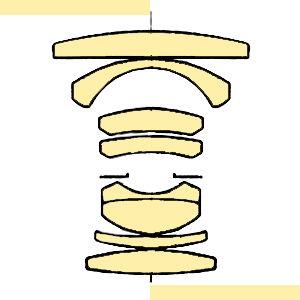
Not only an interesting reflection, but also an interesting lens section:

The rear half very much looks like an ordinary 1.4/50mm lens, and the front part seems to be deviated from the Zeiss Planar 2.8/80mm for the Hasselblad, which is slightly "wideangle" as well:
https://www.zeiss.ch/content/dam/consumer-products/downloads/historical-products/photography/hasselblad-cf/de/datasheet-zeiss-planar-2880-de.pdf
The Konica AR 1.8/40mm has a similar construction, too:
http://www.artaphot.ch/konica-ar/objektive/432-konica-hexanon-40mm-f18
S
_________________
www.artaphot.ch |
|
| 返回顶部 |
|
|
caspert79
注册时间: 2010年10月31日
文章: 3912
来自: The Netherlands
|
发表于: 周日 1月 07, 2024 7:14 pm 文章标题: |
|
发表于: 周日 1月 07, 2024 7:14 pm 文章标题: |
|
|
caspert79 wrote:
| Doc Sharptail 写道: |
Interesting that the blades are casting a reflection of their own.
I don't think I've seen that before.
The only 35 f2 I have will exhibit angled flare rays with the light source well out of the image area. It's definitely an older lens.
Kind of curious about the condition of the blades in your lens, which isn't an informed question at all...
-D.S. |
I haven’t owned many Russian lenses, but the ones I had didn’t have black aperture blades. I’m pretty sure the metal colored blades are the source of ‘the problem’. |
|
| 返回顶部 |
|
|
caspert79
注册时间: 2010年10月31日
文章: 3912
来自: The Netherlands
|
发表于: 周日 1月 07, 2024 7:48 pm 文章标题: |
|
发表于: 周日 1月 07, 2024 7:48 pm 文章标题: |
|
|
caspert79 wrote:
@Stephan: thanks for your observations, very interesting. |
|
| 返回顶部 |
|
|
kiddo
注册时间: 2018年6月29日
文章: 1630
|
发表于: 周一 1月 08, 2024 6:46 pm 文章标题: |
|
发表于: 周一 1月 08, 2024 6:46 pm 文章标题: |
|
|
kiddo wrote:
| caspert79 写道: |
| Doc Sharptail 写道: |
Interesting that the blades are casting a reflection of their own.
I don't think I've seen that before.
The only 35 f2 I have will exhibit angled flare rays with the light source well out of the image area. It's definitely an older lens.
Kind of curious about the condition of the blades in your lens, which isn't an informed question at all...
-D.S. |
I haven’t owned many Russian lenses, but the ones I had didn’t have black aperture blades. I’m pretty sure the metal colored blades are the source of ‘the problem’. |
i have few lenses with metal colored blades and i don´t recall having these results, it might have to do with glass type or coatings?
by the way, i´ve seen the results on landscapes compared to minolta, and to be honest, i didn´t expected to be on par closed down |
|
| 返回顶部 |
|
|
visualopsins

注册时间: 2009年3月5日
文章: 11699
来自: California
Expire: 2027-07-11
|
发表于: 周一 1月 08, 2024 6:59 pm 文章标题: |
|
发表于: 周一 1月 08, 2024 6:59 pm 文章标题: |
|
|
visualopsins wrote:
Lens projection reflects off sensor back into the lens to reflect off diaphragm blades back out of Lens onto sensor. I've seen this with Tamron 2.5/90 macro, in addition to the well-known hot spot.
_________________
☮☮☮☮☮☮☮☮☮☮☮☮☮☮☮☮☮☮☮☮☮☮☮☮☮☮☮☮☮☮☮☮ like attracts like! ☮☮☮☮☮☮☮☮☮☮☮☮☮☮☮☮☮☮☮☮☮☮☮☮☮☮☮☮☮☮☮☮
Cameras: Sony ILCE-7RM2, Spotmatics II, F, and ESII, Nikon P4
Lenses:
M42 Asahi Optical Co., Takumar 1:4 f=35mm, 1:2 f=58mm (Sonnar), 1:2.4 f=58mm (Heliar), 1:2.2 f=55mm (Gaussian), 1:2.8 f=105mm (Model I), 1:2.8/105 (Model II), 1:5.6/200, Tele-Takumar 1:5.6/200, 1:6.3/300, Macro-Takumar 1:4/50, Auto-Takumar 1:2.3 f=35, 1:1.8 f=55mm, 1:2.2 f=55mm, Super-TAKUMAR 1:3.5/28 (fat), 1:2/35 (Fat), 1:1.4/50 (8-element), Super-Multi-Coated Fisheye-TAKUMAR 1:4/17, Super-Multi-Coated TAKUMAR 1:4.5/20, 1:3.5/24, 1:3.5/28, 1:2/35, 1:3.5/35, 1:1.8/85, 1:1.9/85 1:2.8/105, 1:3.5/135, 1:2.5/135 (II), 1:4/150, 1:4/200, 1:4/300, 1:4.5/500, Super-Multi-Coated Macro-TAKUMAR 1:4/50, 1:4/100, Super-Multi-Coated Bellows-TAKUMAR 1:4/100, SMC TAKUMAR 1:1.4/50, 1:1.8/55
M42 Carl Zeiss Jena Flektogon 2.4/35
Contax Carl Zeiss Vario-Sonnar T* 28-70mm F3.5-4.5
Pentax K-mount SMC PENTAX-A ZOOM 1:3.5 35~105mm, SMC PENTAX ZOOM 1:4 45~125mm
Nikon Micro-NIKKOR-P-C Auto 1:3.5 f=55mm, NIKKOR-P Auto 105mm f/2.5 Pre-AI (Sonnar), Micro-NIKKOR 105mm 1:4 AI, NIKKOR AI-S 35-135mm f/3,5-4,5
Solinon 1:5.6/18 ASPH.
Tamron SP 17mm f/3.5 (51B), Tamron SP 17mm f/3.5 (151B), SP 500mm f/8 (55BB), SP 70-210mm f/3.5 (19AH)
Vivitar 100mm 1:2.8 MC 1:1 Macro Telephoto (Kiron)
|
|
| 返回顶部 |
|
|
caspert79
注册时间: 2010年10月31日
文章: 3912
来自: The Netherlands
|
发表于: 周一 1月 08, 2024 7:02 pm 文章标题: |
|
发表于: 周一 1月 08, 2024 7:02 pm 文章标题: |
|
|
caspert79 wrote:
| kiddo 写道: |
| caspert79 写道: |
| Doc Sharptail 写道: |
Interesting that the blades are casting a reflection of their own.
I don't think I've seen that before.
The only 35 f2 I have will exhibit angled flare rays with the light source well out of the image area. It's definitely an older lens.
Kind of curious about the condition of the blades in your lens, which isn't an informed question at all...
-D.S. |
I haven’t owned many Russian lenses, but the ones I had didn’t have black aperture blades. I’m pretty sure the metal colored blades are the source of ‘the problem’. |
i have few lenses with metal colored blades and i don´t recall having these results, it might have to do with glass type or coatings?
by the way, i´ve seen the results on landscapes compared to minolta, and to be honest, i didn´t expected to be on par closed down |
Yeah, quite surprising. |
|
| 返回顶部 |
|
|
Alun Thomas
注册时间: 2018年8月20日
文章: 801
来自: New Zealand
|
发表于: 周一 1月 08, 2024 8:01 pm 文章标题: |
|
发表于: 周一 1月 08, 2024 8:01 pm 文章标题: |
|
|
Alun Thomas wrote:
Some of the optical signature of a lens, in terms of flare and other aspects, is also the result of things like sensor coating, and possibly camera mount geometry too, as well as filter design factors for things like colour shifts and corner resolution, not to mention the software choices made by that camera makers engineers. A second part of the puzzle is the construction of adapters, although lately the quality seems to be improved in many ways. I've often wanted to test certain lenses with different bodies from different manufacturers in controlled conditions to see if it could be quantified more fully, as this would also be worthwhile information to the average enthusiast. Unfortunately I don't have access to a second body myself and don't come across other enthusiasts in person.
There's a wealth of information about lens differences but surprisingly little about another quite important piece of the puzzle. |
|
| 返回顶部 |
|
|
caspert79
注册时间: 2010年10月31日
文章: 3912
来自: The Netherlands
|
发表于: 周一 1月 08, 2024 8:20 pm 文章标题: |
|
发表于: 周一 1月 08, 2024 8:20 pm 文章标题: |
|
|
caspert79 wrote:
| visualopsins 写道: |
| Lens projection reflects off sensor back into the lens to reflect off diaphragm blades back out of Lens onto sensor. I've seen this with Tamron 2.5/90 macro, in addition to the well-known hot spot. |
Yeah, makes sense. The metal colored blades reflect light easily as well. |
|
| 返回顶部 |
|
|
visualopsins
注册时间: 2009年3月5日
文章: 11699
来自: California
Expire: 2027-07-11
|
发表于: 周一 1月 08, 2024 10:24 pm 文章标题: |
|
发表于: 周一 1月 08, 2024 10:24 pm 文章标题: |
|
|
visualopsins wrote:
| caspert79 写道: |
| visualopsins 写道: |
| Lens projection reflects off sensor back into the lens to reflect off diaphragm blades back out of Lens onto sensor. I've seen this with Tamron 2.5/90 macro, in addition to the well-known hot spot. |
Yeah, makes sense. The metal colored blades reflect light easily as well. |
Or...the flare is simply lighting up the interior of the lens, adding to lens projection. In that case no sensor reflection; no diaphram blades reflection.
_________________
☮☮☮☮☮☮☮☮☮☮☮☮☮☮☮☮☮☮☮☮☮☮☮☮☮☮☮☮☮☮☮☮ like attracts like! ☮☮☮☮☮☮☮☮☮☮☮☮☮☮☮☮☮☮☮☮☮☮☮☮☮☮☮☮☮☮☮☮
Cameras: Sony ILCE-7RM2, Spotmatics II, F, and ESII, Nikon P4
Lenses:
M42 Asahi Optical Co., Takumar 1:4 f=35mm, 1:2 f=58mm (Sonnar), 1:2.4 f=58mm (Heliar), 1:2.2 f=55mm (Gaussian), 1:2.8 f=105mm (Model I), 1:2.8/105 (Model II), 1:5.6/200, Tele-Takumar 1:5.6/200, 1:6.3/300, Macro-Takumar 1:4/50, Auto-Takumar 1:2.3 f=35, 1:1.8 f=55mm, 1:2.2 f=55mm, Super-TAKUMAR 1:3.5/28 (fat), 1:2/35 (Fat), 1:1.4/50 (8-element), Super-Multi-Coated Fisheye-TAKUMAR 1:4/17, Super-Multi-Coated TAKUMAR 1:4.5/20, 1:3.5/24, 1:3.5/28, 1:2/35, 1:3.5/35, 1:1.8/85, 1:1.9/85 1:2.8/105, 1:3.5/135, 1:2.5/135 (II), 1:4/150, 1:4/200, 1:4/300, 1:4.5/500, Super-Multi-Coated Macro-TAKUMAR 1:4/50, 1:4/100, Super-Multi-Coated Bellows-TAKUMAR 1:4/100, SMC TAKUMAR 1:1.4/50, 1:1.8/55
M42 Carl Zeiss Jena Flektogon 2.4/35
Contax Carl Zeiss Vario-Sonnar T* 28-70mm F3.5-4.5
Pentax K-mount SMC PENTAX-A ZOOM 1:3.5 35~105mm, SMC PENTAX ZOOM 1:4 45~125mm
Nikon Micro-NIKKOR-P-C Auto 1:3.5 f=55mm, NIKKOR-P Auto 105mm f/2.5 Pre-AI (Sonnar), Micro-NIKKOR 105mm 1:4 AI, NIKKOR AI-S 35-135mm f/3,5-4,5
Solinon 1:5.6/18 ASPH.
Tamron SP 17mm f/3.5 (51B), Tamron SP 17mm f/3.5 (151B), SP 500mm f/8 (55BB), SP 70-210mm f/3.5 (19AH)
Vivitar 100mm 1:2.8 MC 1:1 Macro Telephoto (Kiron)
|
|
| 返回顶部 |
|
|
caspert79
注册时间: 2010年10月31日
文章: 3912
来自: The Netherlands
|
发表于: 周二 1月 09, 2024 5:32 am 文章标题: |
|
发表于: 周二 1月 09, 2024 5:32 am 文章标题: |
|
|
caspert79 wrote:
| visualopsins 写道: |
| caspert79 写道: |
| visualopsins 写道: |
| Lens projection reflects off sensor back into the lens to reflect off diaphragm blades back out of Lens onto sensor. I've seen this with Tamron 2.5/90 macro, in addition to the well-known hot spot. |
Yeah, makes sense. The metal colored blades reflect light easily as well. |
Or...the flare is simply lighting up the interior of the lens, adding to lens projection. In that case no sensor reflection; no diaphram blades reflection. |
If you look closely, you can see the shape of the individual aperture blades. |
|
| 返回顶部 |
|
|
visualopsins
注册时间: 2009年3月5日
文章: 11699
来自: California
Expire: 2027-07-11
|
发表于: 周二 1月 09, 2024 6:04 am 文章标题: |
|
发表于: 周二 1月 09, 2024 6:04 am 文章标题: |
|
|
visualopsins wrote:
| caspert79 写道: |
| visualopsins 写道: |
| caspert79 写道: |
| visualopsins 写道: |
| Lens projection reflects off sensor back into the lens to reflect off diaphragm blades back out of Lens onto sensor. I've seen this with Tamron 2.5/90 macro, in addition to the well-known hot spot. |
Yeah, makes sense. The metal colored blades reflect light easily as well. |
Or...the flare is simply lighting up the interior of the lens, adding to lens projection. In that case no sensor reflection; no diaphram blades reflection. |
If you look closely, you can see the shape of the individual aperture blades. |
I see them clearly...
Suppose the lens has a front cap. A hole is drilled in the side of the lens body to place a lamp inside behind the aperture, thus lighting the interior of the lens behind the aperture, which we see in the image... The flare could be lighting up the interior of the lens behind the aperture...
_________________
☮☮☮☮☮☮☮☮☮☮☮☮☮☮☮☮☮☮☮☮☮☮☮☮☮☮☮☮☮☮☮☮ like attracts like! ☮☮☮☮☮☮☮☮☮☮☮☮☮☮☮☮☮☮☮☮☮☮☮☮☮☮☮☮☮☮☮☮
Cameras: Sony ILCE-7RM2, Spotmatics II, F, and ESII, Nikon P4
Lenses:
M42 Asahi Optical Co., Takumar 1:4 f=35mm, 1:2 f=58mm (Sonnar), 1:2.4 f=58mm (Heliar), 1:2.2 f=55mm (Gaussian), 1:2.8 f=105mm (Model I), 1:2.8/105 (Model II), 1:5.6/200, Tele-Takumar 1:5.6/200, 1:6.3/300, Macro-Takumar 1:4/50, Auto-Takumar 1:2.3 f=35, 1:1.8 f=55mm, 1:2.2 f=55mm, Super-TAKUMAR 1:3.5/28 (fat), 1:2/35 (Fat), 1:1.4/50 (8-element), Super-Multi-Coated Fisheye-TAKUMAR 1:4/17, Super-Multi-Coated TAKUMAR 1:4.5/20, 1:3.5/24, 1:3.5/28, 1:2/35, 1:3.5/35, 1:1.8/85, 1:1.9/85 1:2.8/105, 1:3.5/135, 1:2.5/135 (II), 1:4/150, 1:4/200, 1:4/300, 1:4.5/500, Super-Multi-Coated Macro-TAKUMAR 1:4/50, 1:4/100, Super-Multi-Coated Bellows-TAKUMAR 1:4/100, SMC TAKUMAR 1:1.4/50, 1:1.8/55
M42 Carl Zeiss Jena Flektogon 2.4/35
Contax Carl Zeiss Vario-Sonnar T* 28-70mm F3.5-4.5
Pentax K-mount SMC PENTAX-A ZOOM 1:3.5 35~105mm, SMC PENTAX ZOOM 1:4 45~125mm
Nikon Micro-NIKKOR-P-C Auto 1:3.5 f=55mm, NIKKOR-P Auto 105mm f/2.5 Pre-AI (Sonnar), Micro-NIKKOR 105mm 1:4 AI, NIKKOR AI-S 35-135mm f/3,5-4,5
Solinon 1:5.6/18 ASPH.
Tamron SP 17mm f/3.5 (51B), Tamron SP 17mm f/3.5 (151B), SP 500mm f/8 (55BB), SP 70-210mm f/3.5 (19AH)
Vivitar 100mm 1:2.8 MC 1:1 Macro Telephoto (Kiron)
|
|
| 返回顶部 |
|
|
caspert79
注册时间: 2010年10月31日
文章: 3912
来自: The Netherlands
|
发表于: 周二 1月 09, 2024 6:12 am 文章标题: |
|
发表于: 周二 1月 09, 2024 6:12 am 文章标题: |
|
|
caspert79 wrote:
| visualopsins 写道: |
| caspert79 写道: |
| visualopsins 写道: |
| caspert79 写道: |
| visualopsins 写道: |
| Lens projection reflects off sensor back into the lens to reflect off diaphragm blades back out of Lens onto sensor. I've seen this with Tamron 2.5/90 macro, in addition to the well-known hot spot. |
Yeah, makes sense. The metal colored blades reflect light easily as well. |
Or...the flare is simply lighting up the interior of the lens, adding to lens projection. In that case no sensor reflection; no diaphram blades reflection. |
If you look closely, you can see the shape of the individual aperture blades. |
I see them clearly...
Suppose the lens has a front cap. A hole is drilled in the side of the lens body to place a lamp inside behind the aperture, thus lighting the interior of the lens behind the aperture, which we see in the image... The flare could be lighting up the interior of the lens behind the aperture... |
Now i see what you mean, yes it’s possible. The back of the aperture is lighted on way or the other. |
|
| 返回顶部 |
|
|
calvin83

注册时间: 2009年4月12日
文章: 7740
来自: Hong Kong
|
发表于: 周二 1月 09, 2024 11:01 am 文章标题: |
|
发表于: 周二 1月 09, 2024 11:01 am 文章标题: |
|
|
calvin83 wrote:
I would not be surprised if the aperture will reflect lights or there are light leaks at certain aperture value.
Here is a photo take from the rear of my own copy:

_________________
The best lens is the one you have with you.
https://lensfever.com/
https://www.instagram.com/_lens_fever/ |
|
| 返回顶部 |
|
|
RokkorDoctor

注册时间: 2021年11月27日
文章: 1562
来自: Kent, UK
Expire: 2025-05-01
|
发表于: 周二 1月 09, 2024 11:33 am 文章标题: |
|
发表于: 周二 1月 09, 2024 11:33 am 文章标题: |
|
|
RokkorDoctor wrote:
| caspert79 写道: |
| visualopsins 写道: |
| caspert79 写道: |
| visualopsins 写道: |
| caspert79 写道: |
| visualopsins 写道: |
| Lens projection reflects off sensor back into the lens to reflect off diaphragm blades back out of Lens onto sensor. I've seen this with Tamron 2.5/90 macro, in addition to the well-known hot spot. |
Yeah, makes sense. The metal colored blades reflect light easily as well. |
Or...the flare is simply lighting up the interior of the lens, adding to lens projection. In that case no sensor reflection; no diaphram blades reflection. |
If you look closely, you can see the shape of the individual aperture blades. |
I see them clearly...
Suppose the lens has a front cap. A hole is drilled in the side of the lens body to place a lamp inside behind the aperture, thus lighting the interior of the lens behind the aperture, which we see in the image... The flare could be lighting up the interior of the lens behind the aperture... |
Now i see what you mean, yes it’s possible. The back of the aperture is lighted on way or the other. |
This is a problem with lenses with shiny reflective aperture blades.
It can be difficult to work out whether you are looking at the front or rear reflection of the aperture blades, and which lens surfaces are responsible for the "ghost" image (it's not really a "ghost image", but you know what I mean.)
In extreme contrast situations like this (dark lawn, sun near the centre of the frame), the residual internal reflections that lens designers would consider non-problematic for "normal" images, can become a problem. I would hazard a guess that caspert79 had a high dynamic range optimisation set in the camera, or lifted shadows quite a bit during post-processing, which exacerbates this kind of problem.
The fact that the surface structure and overlapping edges of the blades are sharply depicted suggests this is not a simple reflection of the rear of the aperture blades being imaged by the normal refractive properties of the rear cell, but rather additional reflections off internal lens surfaces are involved.
It is quite possible that this is a reflection off the front surface of the aperture blades bouncing back off the inner surface of one of the front cell elements, and that the reflection off the sensor surface is not involved here at all. In my experience, most strong specular sensor surface refections such as that of the sharp image of the sun in the frame show some form of colour banding/pattern in the ghost image(s) caused by sensor reflection, resulting from the colour filter in front of the sensor; this seems totally absent here.
_________________
Mark
SONY A7S, A7RII + dust-sealed modded Novoflex/Fotodiox/Rayqual MD-NEX adapters
Minolta SR-1, SRT-101/303, XD7/XD11, XGM, X700
Bronica SQAi
Ricoh GX100
Minolta majority of all Rokkor SR/AR/MC/MD models made
Sigma 14mm/3.5 for SR mount
Tamron SP 60B 300mm/2.8 (Adaptall)
Samyang T-S 24mm/3.5 (Nikon mount, DIY converted to SR mount)
Schneider-Kreuznach PC-Super-Angulon 28mm/2.8 (SR mount)
Bronica PS 35/40/50/65/80/110/135/150/180/200/250mm |
|
| 返回顶部 |
|
|
|
|
 中文
 Español
 Magyar
 Русский
 Deutsch
 日本語
 Français