| 查看上一个主题 :: 查看下一个主题 |
| 作者 |
内容 |
kds315* 


注册时间: 2008年3月12日
文章: 16912
来自: Kehl, Germany
Expire: 2021-03-09
|
 发表于: 周二 4月 09, 2024 11:36 am 文章标题: Lewisia cotyledon with UV-Nikkor f4.5/105mm |
|
发表于: 周二 4月 09, 2024 11:36 am 文章标题: Lewisia cotyledon with UV-Nikkor f4.5/105mm |
|
|
kds315* wrote:
Quite warm here (27C/81F) for first week of April, so my Lewisia flowers started to bloom...
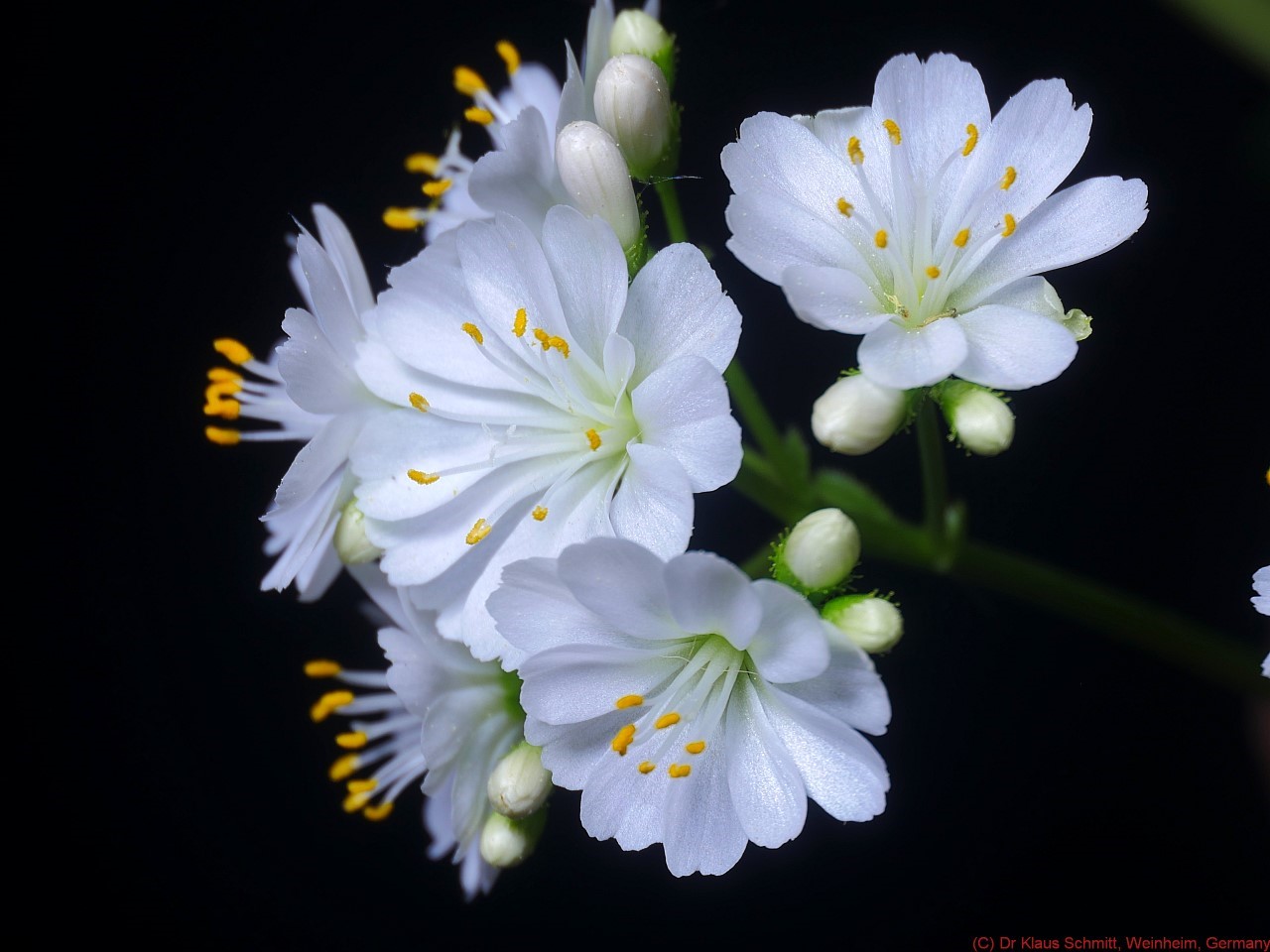
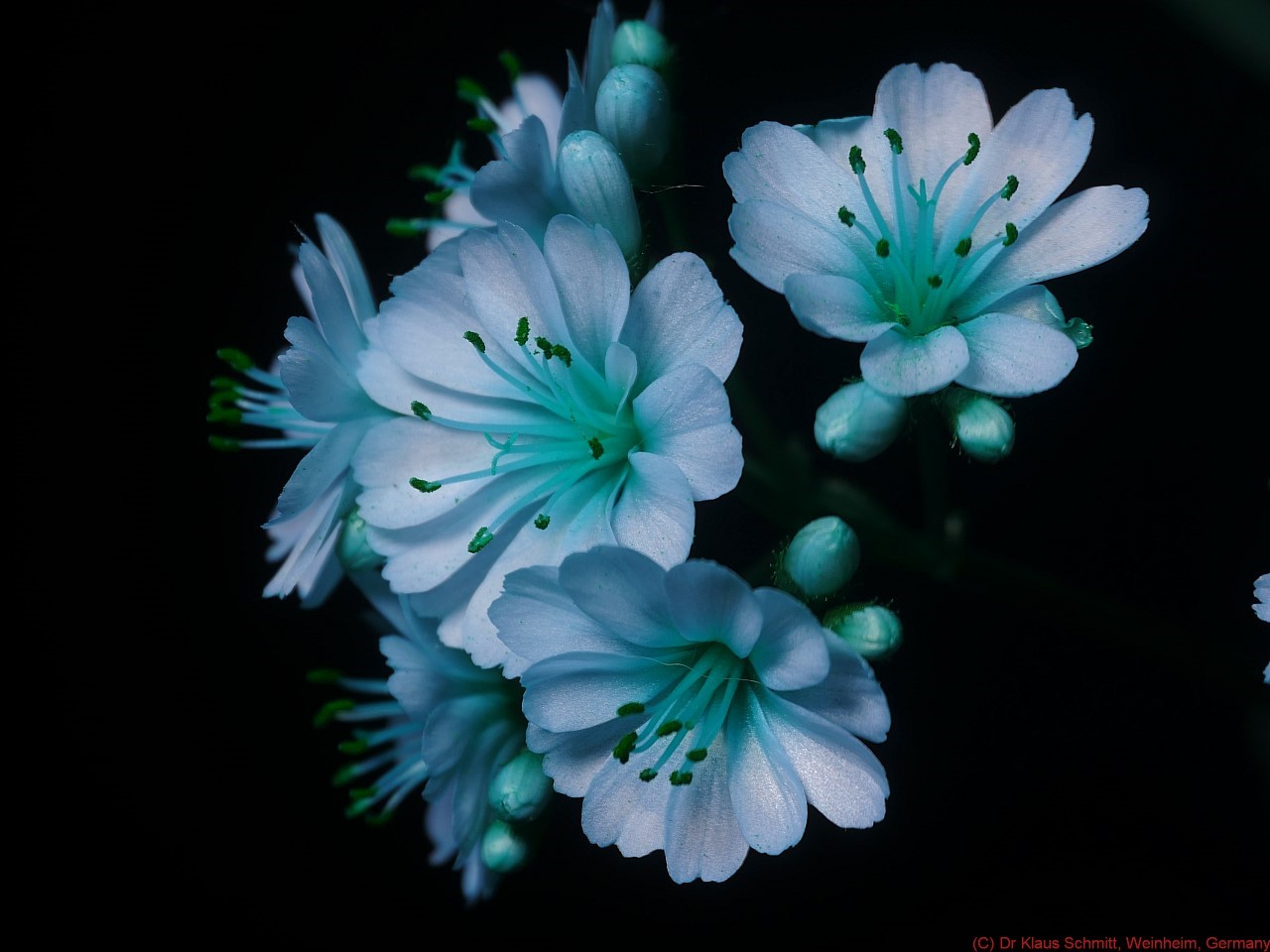
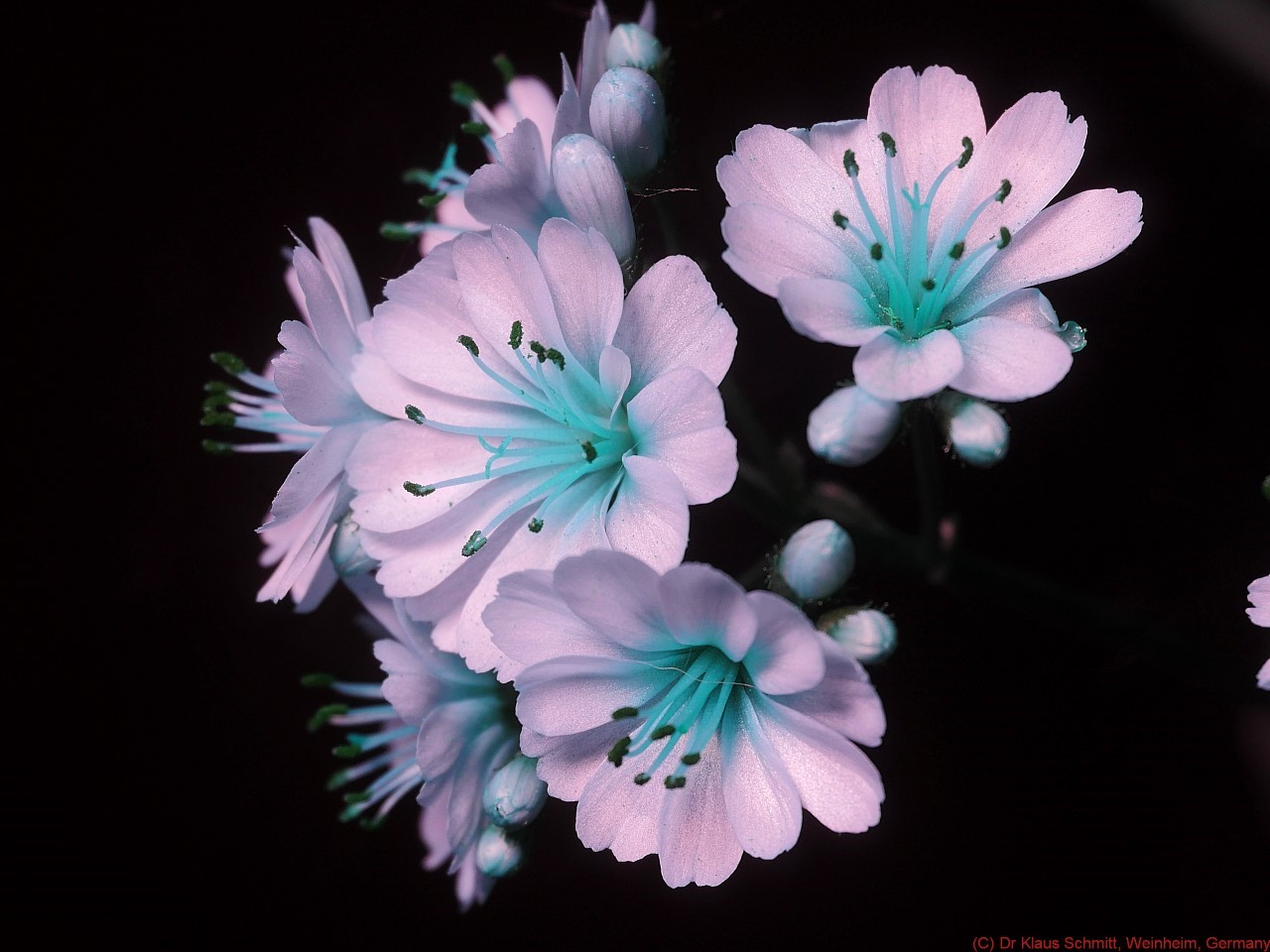
So today shots of a white long blooming, perennial flower: Cliff maids - Lewisia cotyledon https://en.wikipedia.org/wiki/Lewisia_cotyledon in reflected ultraviolet photography and simulated bee and butterfly vision. All shots were done at f11 in reflected ultraviolet photography using my "work horse" UV filter, the Baader-U filter, as well as my XBV filters for simulated bee and butterfly vision. Lens was a UV-Nikkor 105mm quartz fluorite lens. Light source was a studio flash modified for high UV output by carefully etching away the golden UV blocking coating on that Xenon bulb.
Visible light (400-650nm):
Reflected UV (300-400nm):

Simulated Bee vision (300-550nm):
Simulated Butterfly vision (300-650nm):
Quadriptych of human vision, UV, simulated bee and butterfly vision (left to right, top to bottom):
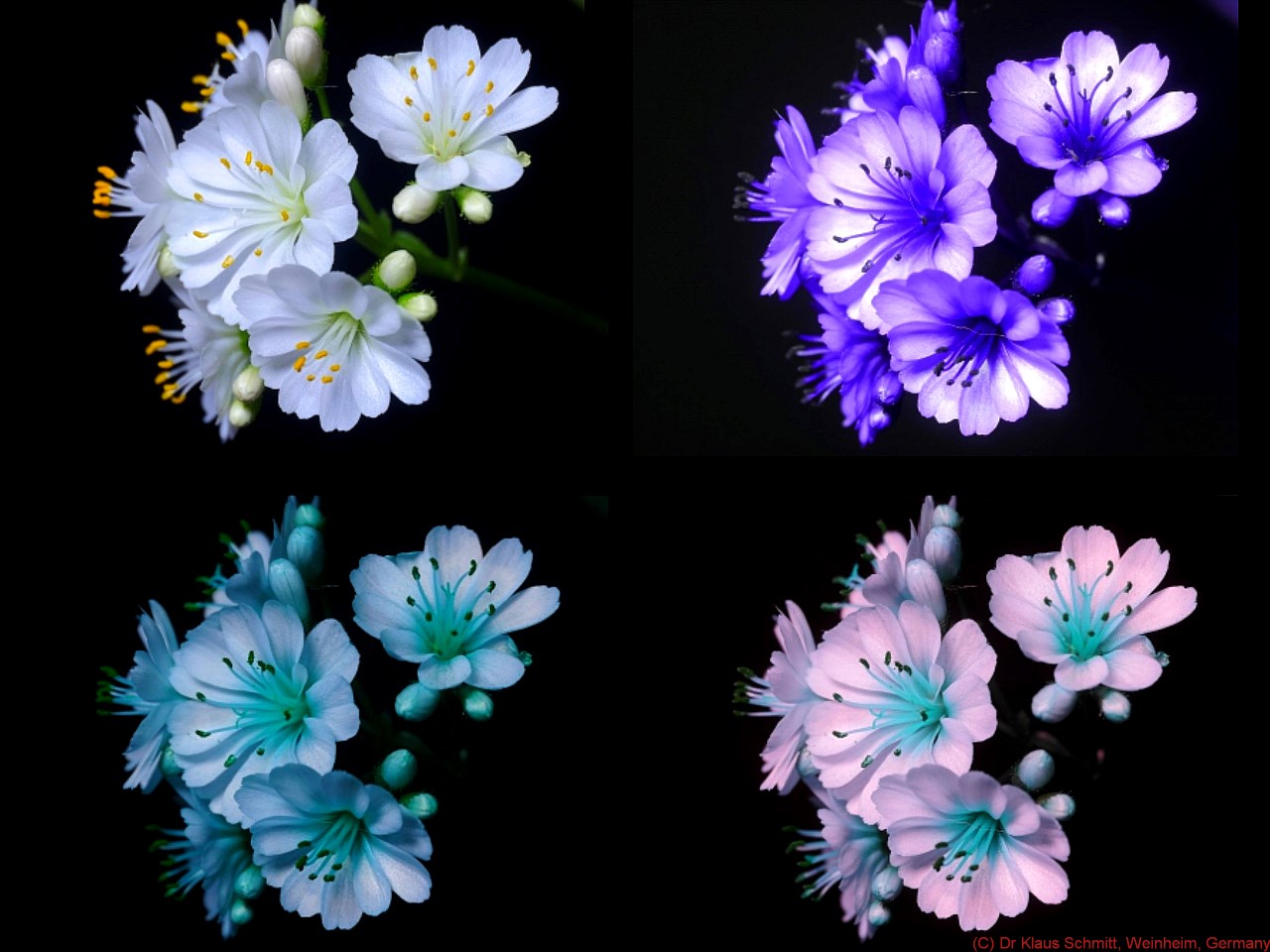
Lewisia has a visible UV pattern, its petal tips are UV bright around 385nm, its center is UV dark, so this gets quite nicely visible, also in simulated butterfly and bee vision.
But there is something special about this one - there is a highly UV reflective area visible, formed by those shiny petals which is especially quite visible in UV! This has recently been discovered by Prof. (em) Klaus Lunau of the University of Duesseldorf, Germany and he has published about that in NATURE 2020: Lunau, K., Ren, ZX., Fan, XQ. et al. Nectar mimicry: a new phenomenon. Sci Rep 10, 7039 (2020). https://www.nature.com/articles/s41598-020-63997-3
Also on my site: https://photographyoftheinvisibleworld.blogspot.com/2024/04/cliff-maids-lewisia-cotyledon-in.html
_________________
Klaus - Admin
"S'il vient a point, me souviendra" [Thomas Bohier (1460-1523)]
http://www.macrolenses.de for macro and special lens info
http://www.pbase.com/kds315/uv_photos for UV Images and lens/filter info
https://www.flickr.com/photos/kds315/albums my albums using various lenses
http://photographyoftheinvisibleworld.blogspot.com/ my UV BLOG
http://www.travelmeetsfood.com/blog Food + Travel BLOG
https://galeriafotografia.com Architecture + Drone photography
Currently most FAV lens(es):
X80QF f3.2/80mm
Hypergon f11/26mm
ELCAN UV f5.6/52mm
Zeiss UV-Planar f4/60mm
Zeiss UV-Planar f2/62mm
Lomo Уфар-12 f2.5/41mm
Lomo Зуфар-2 f4.0/350mm
Lomo ZIKAR-1A f1.2/100mm
Nikon UV Nikkor f4.5/105mm
Zeiss UV-Sonnar f4.3/105mm
CERCO UV-VIS-NIR f1.8/45mm
CERCO UV-VIS-NIR f4.1/94mm
CERCO UV-VIS-NIR f2.8/100mm
Steinheil Quarzobjektiv f1.8/50mm
Pentax Quartz Takumar f3.5/85mm
Carl Zeiss Jena UV-Objektiv f4/60mm
NYE OPTICAL Lyman-Alpha II f1.1/90mm
NYE OPTICAL Lyman-Alpha I f2.8/200mm
COASTAL OPTICS f4/60mm UV-VIS-IR Apo
COASTAL OPTICS f4.5/105mm UV-Micro-Apo
Pentax Ultra-Achromatic Takumar f4.5/85mm
Pentax Ultra-Achromatic Takumar f5.6/300mm
Rodenstock UV-Rodagon f5.6/60mm + 105mm + 150mm
最后由 kds315* 于 周三 4月 10, 2024 2:04 pm 编辑;共编辑 2 次 |
|
| 返回顶部 |
|
 |
blotafton


注册时间: 2013年8月8日
文章: 1794
来自: Sweden
|
发表于: 周二 4月 09, 2024 6:46 pm 文章标题: |
|
发表于: 周二 4月 09, 2024 6:46 pm 文章标题: |
|
|
blotafton wrote:
Always fascinating to see  |
|
| 返回顶部 |
|
|
simple.joy
注册时间: 2022年5月30日
文章: 954
|
发表于: 周二 4月 09, 2024 7:32 pm 文章标题: Re: Lewisia cotyledon with UV-Nikkor f4.5/105mm |
|
发表于: 周二 4月 09, 2024 7:32 pm 文章标题: Re: Lewisia cotyledon with UV-Nikkor f4.5/105mm |
|
|
simple.joy wrote:
| kds315* 写道: |
Quite warm here (27C/81F) for first week of April, so my Lewisia flowers start to bloom...
So today shots of a white long blooming, perennial flower: Cliff maids - Lewisia cotyledon https://en.wikipedia.org/wiki/Lewisia_cotyledon in reflected ultraviolet photography and simulated bee and butterfly vision. All shots were done at f11 in reflected ultraviolet photography using my "work horse" UV filter, the Baader-U filter, as well as my XBV filters for simulated bee and butterfly vision. Lens was a UV-Nikkor 105mm quartz fluorite lens. Light source was a studio flash modified for high UV output by carefully etching away the golden UV blocking coating on that Xenon bulb.
Visible light (400-650nm):
|
Good looking arrangement and very interesting to see! Seems particularly exciting documenting something that's been recently discovered. Great work!
_________________
---
Manual lens enthusiast
https://www.flickr.com/photos/simple_joy/ |
|
| 返回顶部 |
|
|
visualopsins
注册时间: 2009年3月5日
文章: 11705
来自: California
Expire: 2027-07-11
|
发表于: 周二 4月 09, 2024 7:55 pm 文章标题: |
|
发表于: 周二 4月 09, 2024 7:55 pm 文章标题: |
|
|
visualopsins wrote:
Fascinating "concordant reflection"
Watch Feynman explain "Probability and Uncertainty - The Quantum Mechanical View of Nature" https://www.youtube.com/watch?v=kEx-gRfuhhk&t=15046s
_________________
☮☮☮☮☮☮☮☮☮☮☮☮☮☮☮☮☮☮☮☮☮☮☮☮☮☮☮☮☮☮☮☮ like attracts like! ☮☮☮☮☮☮☮☮☮☮☮☮☮☮☮☮☮☮☮☮☮☮☮☮☮☮☮☮☮☮☮☮
Cameras: Sony ILCE-7RM2, Spotmatics II, F, and ESII, Nikon P4
Lenses:
M42 Asahi Optical Co., Takumar 1:4 f=35mm, 1:2 f=58mm (Sonnar), 1:2.4 f=58mm (Heliar), 1:2.2 f=55mm (Gaussian), 1:2.8 f=105mm (Model I), 1:2.8/105 (Model II), 1:5.6/200, Tele-Takumar 1:5.6/200, 1:6.3/300, Macro-Takumar 1:4/50, Auto-Takumar 1:2.3 f=35, 1:1.8 f=55mm, 1:2.2 f=55mm, Super-TAKUMAR 1:3.5/28 (fat), 1:2/35 (Fat), 1:1.4/50 (8-element), Super-Multi-Coated Fisheye-TAKUMAR 1:4/17, Super-Multi-Coated TAKUMAR 1:4.5/20, 1:3.5/24, 1:3.5/28, 1:2/35, 1:3.5/35, 1:1.8/85, 1:1.9/85 1:2.8/105, 1:3.5/135, 1:2.5/135 (II), 1:4/150, 1:4/200, 1:4/300, 1:4.5/500, Super-Multi-Coated Macro-TAKUMAR 1:4/50, 1:4/100, Super-Multi-Coated Bellows-TAKUMAR 1:4/100, SMC TAKUMAR 1:1.4/50, 1:1.8/55
M42 Carl Zeiss Jena Flektogon 2.4/35
Contax Carl Zeiss Vario-Sonnar T* 28-70mm F3.5-4.5
Pentax K-mount SMC PENTAX-A ZOOM 1:3.5 35~105mm, SMC PENTAX ZOOM 1:4 45~125mm
Nikon Micro-NIKKOR-P-C Auto 1:3.5 f=55mm, NIKKOR-P Auto 105mm f/2.5 Pre-AI (Sonnar), Micro-NIKKOR 105mm 1:4 AI, NIKKOR AI-S 35-135mm f/3,5-4,5
Solinon 1:5.6/18 ASPH.
Tamron SP 17mm f/3.5 (51B), Tamron SP 17mm f/3.5 (151B), SP 500mm f/8 (55BB), SP 70-210mm f/3.5 (19AH)
Vivitar 100mm 1:2.8 MC 1:1 Macro Telephoto (Kiron)
|
|
| 返回顶部 |
|
|
kds315*
注册时间: 2008年3月12日
文章: 16912
来自: Kehl, Germany
Expire: 2021-03-09
|
发表于: 周三 4月 10, 2024 5:46 am 文章标题: Re: Lewisia cotyledon with UV-Nikkor f4.5/105mm |
|
发表于: 周三 4月 10, 2024 5:46 am 文章标题: Re: Lewisia cotyledon with UV-Nikkor f4.5/105mm |
|
|
kds315* wrote:
Fascinating indeed - thanks!
| simple.joy 写道: |
Good looking arrangement and very interesting to see! Seems particularly exciting documenting something that's been recently discovered. Great work! |
Thanks, the funny thing is that when I discovered that and when I then talked to Klaus Lunau, he mentioned that they just weeks before found out about that "gloss surface effect" 
_________________
Klaus - Admin
"S'il vient a point, me souviendra" [Thomas Bohier (1460-1523)]
http://www.macrolenses.de for macro and special lens info
http://www.pbase.com/kds315/uv_photos for UV Images and lens/filter info
https://www.flickr.com/photos/kds315/albums my albums using various lenses
http://photographyoftheinvisibleworld.blogspot.com/ my UV BLOG
http://www.travelmeetsfood.com/blog Food + Travel BLOG
https://galeriafotografia.com Architecture + Drone photography
Currently most FAV lens(es):
X80QF f3.2/80mm
Hypergon f11/26mm
ELCAN UV f5.6/52mm
Zeiss UV-Planar f4/60mm
Zeiss UV-Planar f2/62mm
Lomo Уфар-12 f2.5/41mm
Lomo Зуфар-2 f4.0/350mm
Lomo ZIKAR-1A f1.2/100mm
Nikon UV Nikkor f4.5/105mm
Zeiss UV-Sonnar f4.3/105mm
CERCO UV-VIS-NIR f1.8/45mm
CERCO UV-VIS-NIR f4.1/94mm
CERCO UV-VIS-NIR f2.8/100mm
Steinheil Quarzobjektiv f1.8/50mm
Pentax Quartz Takumar f3.5/85mm
Carl Zeiss Jena UV-Objektiv f4/60mm
NYE OPTICAL Lyman-Alpha II f1.1/90mm
NYE OPTICAL Lyman-Alpha I f2.8/200mm
COASTAL OPTICS f4/60mm UV-VIS-IR Apo
COASTAL OPTICS f4.5/105mm UV-Micro-Apo
Pentax Ultra-Achromatic Takumar f4.5/85mm
Pentax Ultra-Achromatic Takumar f5.6/300mm
Rodenstock UV-Rodagon f5.6/60mm + 105mm + 150mm
|
|
| 返回顶部 |
|
|
JMC

注册时间: 2018年5月29日
文章: 185
来自: London, UK
|
发表于: 周三 4月 10, 2024 8:07 am 文章标题: |
|
发表于: 周三 4月 10, 2024 8:07 am 文章标题: |
|
|
JMC wrote:
Very nice Klaus  |
|
| 返回顶部 |
|
|
kds315*
注册时间: 2008年3月12日
文章: 16912
来自: Kehl, Germany
Expire: 2021-03-09
|
发表于: 周三 4月 10, 2024 9:38 am 文章标题: |
|
发表于: 周三 4月 10, 2024 9:38 am 文章标题: |
|
|
kds315* wrote:
| JMC 写道: |
| Very nice Klaus |
Thanks Jonathan - just wanted to make sure I'm not losing my skills...
_________________
Klaus - Admin
"S'il vient a point, me souviendra" [Thomas Bohier (1460-1523)]
http://www.macrolenses.de for macro and special lens info
http://www.pbase.com/kds315/uv_photos for UV Images and lens/filter info
https://www.flickr.com/photos/kds315/albums my albums using various lenses
http://photographyoftheinvisibleworld.blogspot.com/ my UV BLOG
http://www.travelmeetsfood.com/blog Food + Travel BLOG
https://galeriafotografia.com Architecture + Drone photography
Currently most FAV lens(es):
X80QF f3.2/80mm
Hypergon f11/26mm
ELCAN UV f5.6/52mm
Zeiss UV-Planar f4/60mm
Zeiss UV-Planar f2/62mm
Lomo Уфар-12 f2.5/41mm
Lomo Зуфар-2 f4.0/350mm
Lomo ZIKAR-1A f1.2/100mm
Nikon UV Nikkor f4.5/105mm
Zeiss UV-Sonnar f4.3/105mm
CERCO UV-VIS-NIR f1.8/45mm
CERCO UV-VIS-NIR f4.1/94mm
CERCO UV-VIS-NIR f2.8/100mm
Steinheil Quarzobjektiv f1.8/50mm
Pentax Quartz Takumar f3.5/85mm
Carl Zeiss Jena UV-Objektiv f4/60mm
NYE OPTICAL Lyman-Alpha II f1.1/90mm
NYE OPTICAL Lyman-Alpha I f2.8/200mm
COASTAL OPTICS f4/60mm UV-VIS-IR Apo
COASTAL OPTICS f4.5/105mm UV-Micro-Apo
Pentax Ultra-Achromatic Takumar f4.5/85mm
Pentax Ultra-Achromatic Takumar f5.6/300mm
Rodenstock UV-Rodagon f5.6/60mm + 105mm + 150mm
|
|
| 返回顶部 |
|
|
jamaeolus
注册时间: 2014年3月19日
文章: 3202
来自: Eugene
Expire: 2015-08-20
|
发表于: 周三 4月 10, 2024 3:14 pm 文章标题: |
|
发表于: 周三 4月 10, 2024 3:14 pm 文章标题: |
|
|
jamaeolus wrote:
Klaus lovely images! Would you mind telling the basics of how they are created? Do you need a special sensor, or is it done on film? I have managed to get a kyoei acall 35mm 3.5.
_________________
photos are moments frozen in time |
|
| 返回顶部 |
|
|
kds315*
注册时间: 2008年3月12日
文章: 16912
来自: Kehl, Germany
Expire: 2021-03-09
|
发表于: 周三 4月 10, 2024 3:22 pm 文章标题: |
|
发表于: 周三 4月 10, 2024 3:22 pm 文章标题: |
|
|
kds315* wrote:
| jamaeolus 写道: |
| Klaus lovely images! Would you mind telling the basics of how they are created? Do you need a special sensor, or is it done on film? I have managed to get a kyoei acall 35mm 3.5. |
Hi, this is all on my site: http://photographyoftheinvisibleworld.blogspot.com/2020/10/a-simple-tutorial-for-reflected-uv.html
_________________
Klaus - Admin
"S'il vient a point, me souviendra" [Thomas Bohier (1460-1523)]
http://www.macrolenses.de for macro and special lens info
http://www.pbase.com/kds315/uv_photos for UV Images and lens/filter info
https://www.flickr.com/photos/kds315/albums my albums using various lenses
http://photographyoftheinvisibleworld.blogspot.com/ my UV BLOG
http://www.travelmeetsfood.com/blog Food + Travel BLOG
https://galeriafotografia.com Architecture + Drone photography
Currently most FAV lens(es):
X80QF f3.2/80mm
Hypergon f11/26mm
ELCAN UV f5.6/52mm
Zeiss UV-Planar f4/60mm
Zeiss UV-Planar f2/62mm
Lomo Уфар-12 f2.5/41mm
Lomo Зуфар-2 f4.0/350mm
Lomo ZIKAR-1A f1.2/100mm
Nikon UV Nikkor f4.5/105mm
Zeiss UV-Sonnar f4.3/105mm
CERCO UV-VIS-NIR f1.8/45mm
CERCO UV-VIS-NIR f4.1/94mm
CERCO UV-VIS-NIR f2.8/100mm
Steinheil Quarzobjektiv f1.8/50mm
Pentax Quartz Takumar f3.5/85mm
Carl Zeiss Jena UV-Objektiv f4/60mm
NYE OPTICAL Lyman-Alpha II f1.1/90mm
NYE OPTICAL Lyman-Alpha I f2.8/200mm
COASTAL OPTICS f4/60mm UV-VIS-IR Apo
COASTAL OPTICS f4.5/105mm UV-Micro-Apo
Pentax Ultra-Achromatic Takumar f4.5/85mm
Pentax Ultra-Achromatic Takumar f5.6/300mm
Rodenstock UV-Rodagon f5.6/60mm + 105mm + 150mm
|
|
| 返回顶部 |
|
|
jamaeolus
注册时间: 2014年3月19日
文章: 3202
来自: Eugene
Expire: 2015-08-20
|
发表于: 周四 4月 11, 2024 3:04 pm 文章标题: |
|
发表于: 周四 4月 11, 2024 3:04 pm 文章标题: |
|
|
jamaeolus wrote:
Thanks!
_________________
photos are moments frozen in time |
|
| 返回顶部 |
|
|
|
|
|
您不能在本版块发表新主题
您不能回复本版块的主题
您不能编辑自己在版块内的文章
您不能删除自己在版块内的文章
您不能参与本版块的投票
|
 中文
 Español
 Magyar
 Русский
 Deutsch
 日本語
 Français



